06
Feb
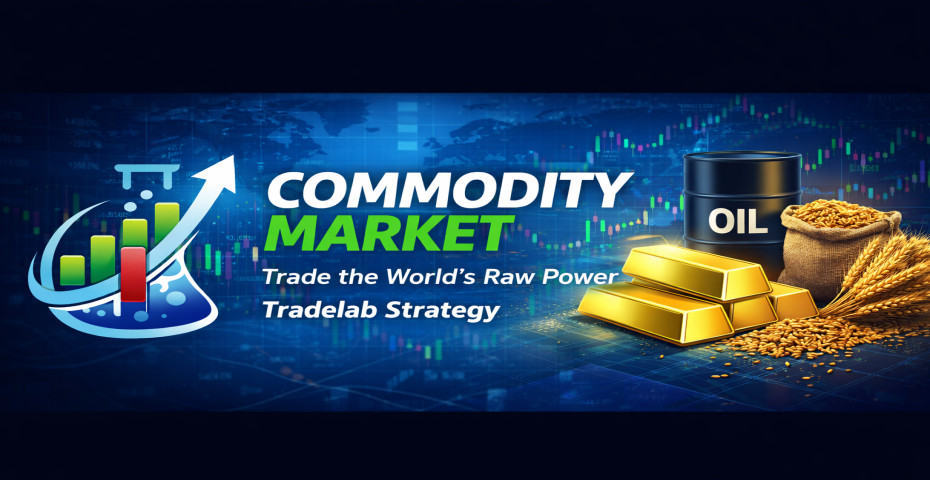
Commodity Market: A Complete Guide by Tradelab Strategy
The commodity market is one of the oldest and most important financial markets in the world. It is where raw materials and primary goods are traded, forming the foundation of the global economy. From energy and metals to agricultural products, commodities influence inflation, currencies, and economic stability.
At Tradelab Strategy, we focus on understanding how commodity price movements create powerful trading opportunities when approached with data, discipline, and strategy.
What Is the Commodity Market?
The commodity market is a marketplace where physical goods are bought and sold, either for immediate delivery (spot market) or for future delivery (derivatives market).
Commodities are generally divided into two major categories:
🔹 Hard Commodities
Naturally extracted resources:
-
Gold
-
Silver
-
Crude Oil
-
Natural Gas
-
Copper
🔹 Soft Commodities
Agricultural products:
-
Wheat
-
Corn
-
Coffee
-
Sugar
-
Cotton
These commodities are traded globally and priced based on supply and demand dynamics.
How the Commodity Market Works
Most commodity trading happens through futures contracts, which allow traders and institutions to buy or sell a commodity at a predetermined price on a future date.
Prices are influenced by:
-
Global supply and demand
-
Weather and natural disasters
-
Geopolitical tensions
-
Inflation and interest rates
-
Currency strength (especially USD)
-
Economic growth and industrial demand
For example, gold often rises during economic uncertainty, while oil prices react strongly to geopolitical events and production changes.
Major Commodity Exchanges
Some of the world’s most important commodity exchanges include:
-
CME Group (USA) – Metals, energy, agriculture
-
NYMEX – Energy products
-
ICE – Oil, gas, soft commodities
-
LME (London Metal Exchange) – Industrial metals
These exchanges provide transparency, liquidity, and standardized contracts for global participants.
Why Traders Trade Commodities
Commodity trading offers unique advantages:
-
Strong trends and volatility
-
Hedge against inflation
-
Diversification beyond forex and stocks
-
Clear reaction to global macro events
Commodities often move differently than currencies or equities, making them an excellent tool for portfolio balance.
Risks in Commodity Trading
Despite the opportunities, commodities carry risks:
-
High volatility
-
Sudden supply shocks
-
Seasonal price behavior
-
Leverage-related losses
That’s why Tradelab Strategy emphasizes structured setups, risk control, and macro-driven analysis rather than emotional trading.
Trading Commodities with Tradelab Strategy
Successful commodity trading requires:
-
Understanding global fundamentals
-
Technical confirmation on price charts
-
Risk-to-reward discipline
-
Patience and consistency
With the right strategy, commodities can become a powerful part of a trader’s long-term plan.
Final Thoughts
The commodity market is deeply connected to the real economy and global events. Whether it’s gold reacting to inflation or oil responding to geopolitical tensions, commodities provide traders with clear narratives and strong price action.
At Tradelab Strategy, we help traders decode these movements and trade commodities with confidence and precision.
Share
Latest blogs

NOVAVERSE
06 Feb 2026
Decentralized Finance
06 Feb 2026
What Is Quantum Technology?
06 Feb 2026
What Is Artificial Intelligence?
06 Feb 2026