26
Feb
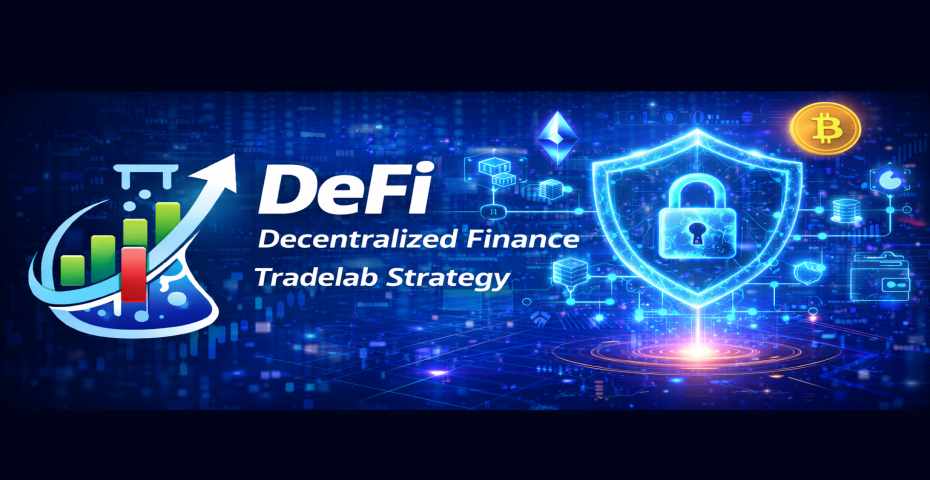
Decentralized Finance (DeFi): The Future of Open Financial Systems
By Tradelab Strategy
Decentralized Finance, commonly known as DeFi, is transforming the traditional financial system by removing intermediaries such as banks and financial institutions. Built on blockchain technology, DeFi enables peer-to-peer financial services that are transparent, secure, and globally accessible.
At Tradelab Strategy, we analyze DeFi as a revolutionary shift in how value, lending, trading, and investments operate in the digital economy.
What Is Decentralized Finance (DeFi)?
Decentralized Finance refers to a financial ecosystem built on blockchain networks that allows users to access financial services without centralized control.
Unlike traditional banking systems, DeFi platforms operate through:
-
Smart contracts
-
Decentralized applications (dApps)
-
Blockchain networks
This creates an open financial system accessible to anyone with an internet connection.
How DeFi Works
1️⃣ Blockchain Infrastructure
Most DeFi applications are built on blockchain platforms that support smart contracts.
2️⃣ Smart Contracts
Smart contracts are self-executing agreements coded on the blockchain.
They automatically perform transactions when conditions are met.
3️⃣ Wallet-Based Access
Users connect through crypto wallets instead of traditional bank accounts.
4️⃣ Liquidity Pools
Funds are supplied by users and used to facilitate trading, lending, and borrowing.
Key Components of DeFi
💱 Decentralized Exchanges (DEXs)
Allow peer-to-peer crypto trading without a central authority.
💰 Lending & Borrowing Platforms
Users can earn interest by lending assets or borrow against collateral.
🏦 Stablecoins
Cryptocurrencies designed to maintain stable value, often pegged to fiat currency.
📊 Yield Farming & Staking
Users earn rewards by providing liquidity or locking assets.
🔐 Decentralized Insurance
Blockchain-based risk management solutions.
Advantages of DeFi
-
No intermediaries
-
Global accessibility
-
Lower transaction costs
-
Transparency
-
User control of assets
-
24/7 market availability
DeFi empowers individuals by giving them direct control over their financial activities.
Risks and Challenges
-
Smart contract vulnerabilities
-
Regulatory uncertainty
-
Market volatility
-
Liquidity risks
-
User responsibility for security
Understanding risk management is essential before participating in DeFi ecosystems.
DeFi vs Traditional Finance
| Traditional Finance | DeFi |
|---|---|
| Banks & institutions | Smart contracts |
| Limited access | Global access |
| Business hours | 24/7 operations |
| Manual approval | Automated execution |
| Centralized control | Decentralized governance |
DeFi and the Future of Finance
The future of DeFi may include:
-
Decentralized identity systems
-
Cross-chain interoperability
-
Institutional DeFi adoption
-
Integration with AI trading models
-
Tokenization of real-world assets
DeFi is a core component of the Web3 movement and the evolving digital economy.
Final Thoughts
Decentralized Finance represents a structural shift from centralized control to decentralized trust. It challenges traditional banking models and opens new opportunities for investors, traders, and innovators.
At Tradelab Strategy, understanding DeFi is essential for navigating modern crypto markets and emerging financial technologies.
Share
Latest blogs
🚨 BREAKING NEWS — NASDAQ × BLOCKCHAIN
26 Feb 2026
🇺🇸 WHITE HOUSE PUSHES CLARITY ACT
26 Feb 2026
NOVAVERSE
26 Feb 2026
What Is Quantum Technology?
26 Feb 2026